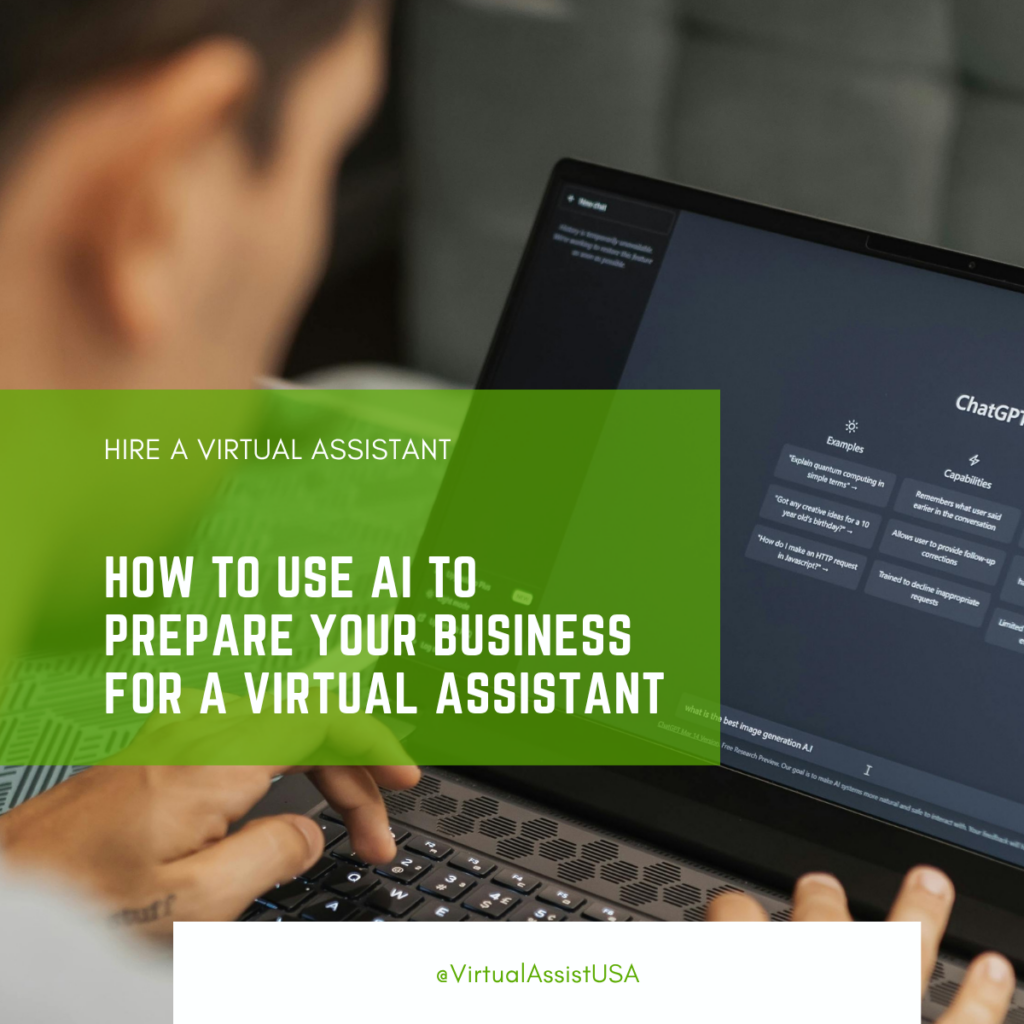
How to Use AI to Prepare Your Business for a Virtual Assistant
Hiring a virtual assistant can change the way your business runs. However, the businesses that get the most value from virtual assistant support usually do one thing first: they get organized.
That is where AI can help.
AI is not a replacement for a skilled virtual assistant. Instead, it can help you clarify what needs to be done, organize your workflows, and prepare your business for smoother delegation. When you combine AI-powered organization with real human support, you create a stronger system for growth.
Here is how to use AI to prepare your business for a virtual assistant.
Why AI Makes Delegation Easier
Many business owners know they need help, but they do not always know what to hand off first.
Their task list lives in their head. Processes are scattered across emails, documents, sticky notes, and project management tools. As a result, delegation feels harder than it should.
AI can help you turn scattered ideas into clear instructions. It can help you identify repeatable tasks, draft simple processes, and organize responsibilities before a virtual assistant steps in.
That preparation matters. A virtual assistant can work faster and more effectively when they understand your priorities, systems, and expectations from the beginning.
For business owners who need help building those systems, Virtual Assist USA’s Business Consulting services can help create the operational foundation before delegation begins.
Step 1: Use AI to Identify What You Should Delegate
The first step is figuring out which tasks should no longer be on your plate.
AI can help you sort your responsibilities into categories, such as:
Administrative tasks
Client communication
Scheduling and calendar management
Email organization
Research
Reporting
Marketing support
Data entry
Website updates
Customer follow-up
Start by listing everything you do in a typical week. Then ask AI to group those tasks by urgency, skill level, and repeatability.
The goal is not to automate everything. The goal is to see which tasks are draining your time and which ones could be handled by a trained virtual assistant.
This step is especially useful if you are exploring Virtual Assistant Services but are not sure where to begin.
Step 2: Turn Messy Tasks Into Clear Workflows
Once you know what you want to delegate, the next step is documenting how those tasks should be done.
This is where many business owners get stuck. They know the process, but they have never written it down.
AI can help create a first draft of a workflow. For example, you can describe how you handle inbox management, onboarding, invoicing, or client follow-up. Then AI can turn that explanation into a step-by-step process.
A basic workflow might include:
What triggers the task
Who is responsible
What tools are used
What steps need to happen
What the final result should look like
When the task is complete
This gives your future virtual assistant a clear starting point. It also reduces confusion, back-and-forth questions, and missed details.
If your business needs more formal SOPs, process development, or operational cleanup, that is a strong fit for Business Consulting.
Step 3: Create Better Instructions Before You Hire
Great delegation depends on clear instructions.
AI can help you turn vague directions into usable task briefs. Instead of saying, “Please handle my inbox,” you can create a more specific instruction set.
For example:
Check the inbox twice daily.
Flag urgent client emails.
Archive newsletters.
Move billing messages into the finance folder.
Draft responses for approval.
Send only approved responses until full trust is established.
That level of detail helps your virtual assistant understand your expectations faster.
It also protects your time. The clearer the instructions are at the beginning, the less time you spend correcting work later.
Step 4: Use AI to Build Templates
Templates are one of the easiest ways to prepare for delegation.
AI can help draft templates for common business needs, including:
Email responses
Client onboarding messages
Meeting agendas
Follow-up emails
Project updates
Weekly reports
Task checklists
Customer service replies
Your virtual assistant can then use these templates as a foundation and adjust them to match your brand voice, client needs, and internal standards.
This is where AI and human support work well together. AI can create the first draft. A skilled assistant can refine, personalize, and manage the work with judgment.
Step 5: Organize Your Tools and Access
Before bringing on a virtual assistant, review the tools your business uses every day.
This may include:
Email
Calendar
CRM
Project management software
Cloud storage
Website platform
Invoicing tools
Communication tools
Password manager
AI can help you create a simple access checklist so nothing is missed during onboarding.
However, this step should always be handled carefully. You should never share sensitive information casually. Use secure systems, proper permissions, and clear access boundaries.
If your business needs help with website systems, integrations, or technical setup, Virtual Assist USA’s Technical Web Services can support the technology side of your operations.
Step 6: Decide What AI Should Not Do
AI is useful, but it should not be responsible for every part of your business.
Some work still requires human judgment, emotional intelligence, discretion, and relationship awareness. That includes client communication, executive support, sensitive decision-making, quality control, and brand representation.
This is why AI works best as a preparation tool, not a complete replacement.
A virtual assistant can understand context, build trust, communicate with care, and adapt to your preferences. AI can help organize the work, but a human assistant helps move the work forward.
Step 7: Match the Right Assistant to the Right Work
Once your tasks, workflows, and tools are organized, it becomes much easier to find the right support.
You are no longer hiring based on a vague feeling of being overwhelmed. You are hiring with a clear understanding of what needs to be done.
That clarity helps with:
Better assistant matching
Faster onboarding
Clearer expectations
Stronger communication
More productive long-term support
At Virtual Assist USA, the goal is not just to place an assistant. It is to connect businesses with support that fits their needs, workflows, and growth goals.
If you are ready to explore that next step, learn more about Virtual Assistant Services or get started here.
AI Helps You Prepare, But People Help You Grow
AI can help you organize your business before you delegate. It can help you identify tasks, document workflows, draft templates, and create better instructions.
But real support still matters.
The strongest businesses do not choose between AI and people. They use both strategically. AI helps create structure. A virtual assistant helps execute, communicate, and keep the business moving.
If your business is growing but your systems are not keeping up, Virtual Assist USA can help you build the right support structure.
Explore our Business Consulting services, learn more about our Virtual Assistant Services, or chat with us to get started.